Imperial German Uniform Timeline
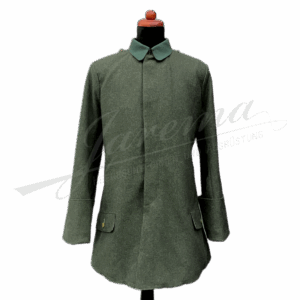
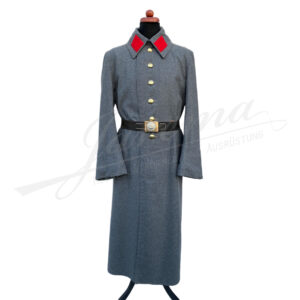
A visual timeline of Imperial German Army uniforms from the pre-war period through the First World War. It shows the development of tunics, trousers, greatcoats, field caps and shoulder boards, including the major changes introduced between the Bunter Rock, Feldrock M07/10 and Feldbluse M15.
You are new to Imperial German uniforms and not sure what uniform you need? Check a quick guide below the chart!
Check for more:
Which Imperial German uniform do I need?
If you are new to Imperial German uniforms, the easiest way to start is with the year and type of impression you want to recreate. Uniform patterns overlapped considerably during the First World War, so the combinations below should be treated as practical starting points rather than strict cut-off dates.
Pre-war and garrison impression
A typical coloured uniform combination includes:
- Waffenrock (Bunte Rock)
- Hose M1870
- Bunte Feldmütze
Although these items originated before the introduction of feldgrau field uniforms, the coloured uniform did not simply disappear in 1914. It continued to be used throughout the First World War as a garrison, training and non-field uniform, and examples of this type of dress could still be encountered until the end of the war.
A particularly good visual illustration of this distinction can be seen in the 1930 film ‘All Quiet on the Western Front’, where coloured uniforms are shown in the garrison and training environment before the soldiers are sent to the front.
The exact configuration of the Waffenrock depended heavily on the regiment, branch of service, German state and period.
Early war – 1914
For a typical field impression from the beginning of the First World War, a good starting point is:
- Feldrock M07/10
- Feldhose M07
- Feldmantel M08 with collar tabs
- Early-war shoulder boards
- Feldmütze M07
The M07/10 was the principal feldgrau field tunic at the outbreak of the war and continued to be worn well beyond 1914.
Transitional period – 1914-1915
The first years of the war saw increasing simplification of uniforms and insignia. A representative transitional combination may include:
- Feldrock M07/10, M13 or simplified M14 pattern
- Feldhose M15
- Feldmantel M08 without collar tabs and with feldgrau painted buttons (or with Feldrock buttons)
- Simplified shoulder boards
- Feldmütze M07
This is one of the most variable periods, as older and newly introduced items were frequently worn alongside one another.
Late war – 1915-1918
For a typical later-war field impression, start with:
- Feldbluse M15
- Feldhose M15
- Einheitsfeldmantel M15
- Late-war M15 shoulder boards
- Einheitsfeldmütze M17
Earlier uniform items did not disappear when the M15 system was introduced, so mixed combinations remained entirely possible depending on the date and unit.
Feldhose M17 were introduced very late in the war. Their actual use within front-line infantry regiments remains debatable, so the Feldhose M15 is generally the safer choice for most late-war infantry impressions.
Not sure yet?
Use the timeline above to compare the main uniform patterns and see how tunics, trousers, greatcoats, shoulder boards and headwear overlapped before and during the First World War.
This guide covers the basic development of enlisted men’s uniforms. Exact configurations varied by German state, branch of service, regiment and period.