Before I begin describing the process behind creating our M1896 Schutztruppe uniform reproduction, I would like to express my sincere thanks to Klaus for sharing his materials with me. They formed an essential foundation for this project and were themselves the result of extensive and meticulous historical research.
Schutztruppe – Historical Background
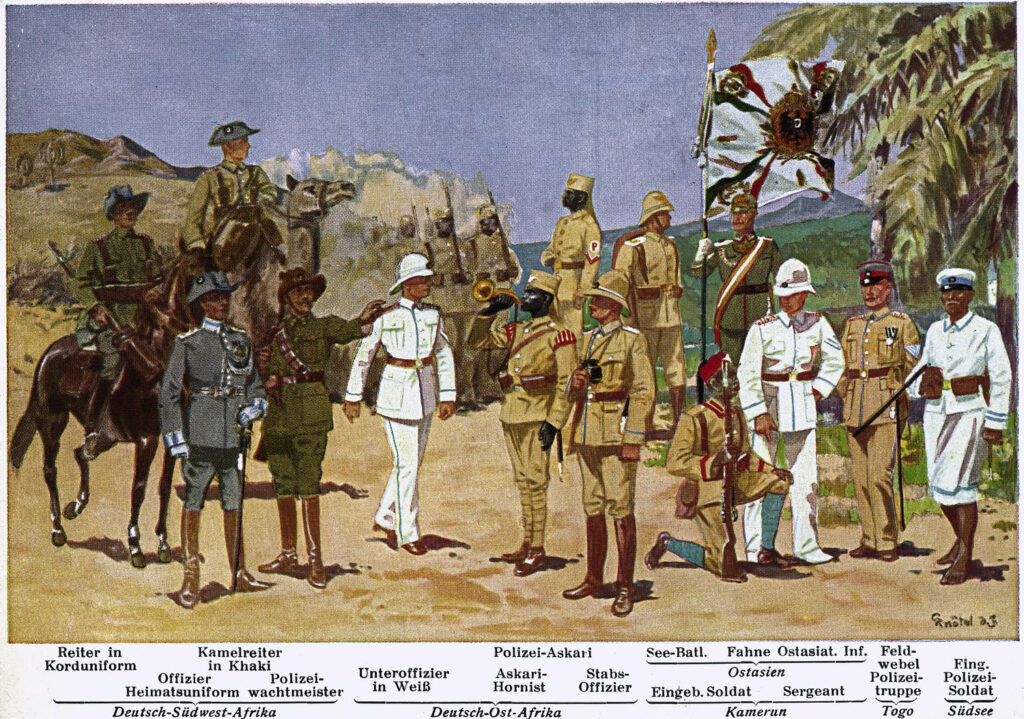
Germany entered the colonial race relatively late. Beginning in the 1880s, the German Empire established colonial possessions in Africa, including German South West Africa (Deutsch-Südwestafrika), German East Africa (Deutsch-Ostafrika), Kamerun, and Togo.
The military forces responsible for maintaining German colonial rule developed into the Schutztruppe (“Protection Force”). Unlike the regular Imperial German Army, the Schutztruppe were specifically organised for colonial service and had to operate under conditions very different from those encountered by troops in Europe. Their organisation and composition varied between the individual colonies, with German officers and NCOs serving alongside locally recruited soldiers, particularly in East Africa and Kamerun. In German South West Africa, however, the Schutztruppe consisted predominantly of European personnel.
Service in Africa presented obvious practical challenges. High temperatures, intense sunlight, dust and the demands of campaigning over long distances made traditional European military clothing poorly suited to everyday colonial service. Uniforms therefore had to evolve to meet the realities of the African environment while retaining a recognisably German military character.
German experience with military service in the demanding African climate eventually led to the introduction of the M1896 khaki cotton twill uniform, designed specifically for colonial conditions.
The fabric
The 1896 Bekleidungsvorschrift für die Kaiserlichen Schutztruppen in Afrika describes the fabric and piping of the uniform as “gelb Khakidrell (…) mit einem Vorstoß von kornblumenblauem Tuch” — yellow-khaki cotton twill with cornflower-blue woollen cloth piping.
The fabric itself was not particularly different from the types of khaki cloth adopted by other colonial powers at the time. One of the distinctive features of the German Schutztruppe uniform, however, was the cornflower-blue piping, which was common to the uniforms worn in all of Germany’s African colonies.*
_____
* The blue piping was used on uniforms made for European personnel. It was absent from the uniforms issued to locally recruited African Askari.
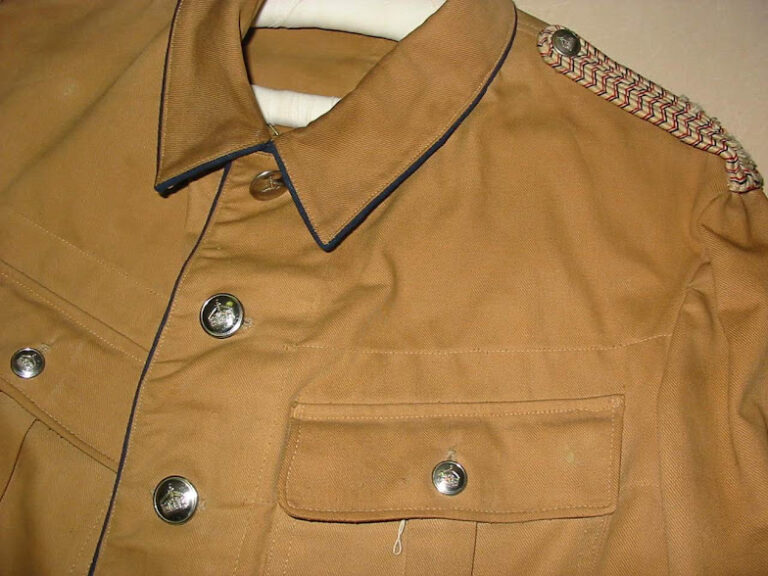
an original piece
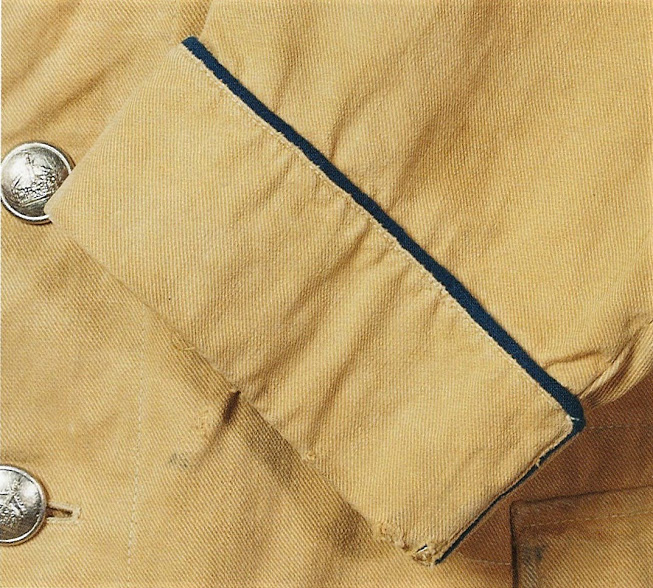
a cuff of an original piece. The fabric is faded, but the piping is clearly darker than standard "kornblumenblau"
After completing the first uniform and sending it to Klaus for evaluation, we concluded that the fabric used for the initial reproduction was too light. Although its colour corresponded quite closely to some surviving originals, these garments had faded considerably over more than a century. I therefore decided to continue searching for a fabric that would more accurately represent the original, factory-new colour of the M1896 uniform rather than the appearance of an aged and faded surviving example.
To find suitable materials for our M1896 Schutztruppe uniform reproduction, I compared photographs and surviving original garments. This made it possible to select an appropriate cotton twill for the main fabric as well as woollen cloth of a suitable colour for the piping.
Interestingly, the blue wool used for the piping on surviving Schutztruppe uniforms differs noticeably from the cornflower blue commonly associated with Imperial German uniforms, such as that used on the bunter Rock. The surviving examples I examined show a distinctly darker shade. For this reason, when selecting the wool for our reproduction, I chose to follow the evidence provided by surviving original uniforms rather than relying solely on the colour described in the 1896 regulations.
first copy, made with brighter fabric.
improved copy, made with darker fabric that is now available in my offer
Buttons and shoulder strapss
The fittings proved to be by far one of the most difficult aspects of recreating the M1896 Schutztruppe uniform. Accurate reproduction buttons were virtually unavailable, or appeared only occasionally in very limited quantities, making them unsuitable for regular production.
Fortunately, I was able to acquire an original large Schutztruppe uniform button, while Phillip kindly lent me an original example of the smaller button. Having both original sizes available made it possible to reproduce them directly rather than relying on photographs, measurements or modern approximations.
Just like the originals, the reproduction buttons are made of brass with a white-metal finish on the face. A Polish craftsman was able to reproduce the original buttons 1:1, including not only their dimensions and appearance but also the exact shape of the shank on the reverse.
This seemingly minor detail is particularly important. Because of the way the buttons are attached to the M1896 tunic, the shape and dimensions of the shank directly affect how the button sits on the garment. Reproducing this feature correctly was therefore a functional requirement, rather than merely a matter of visual accuracy.
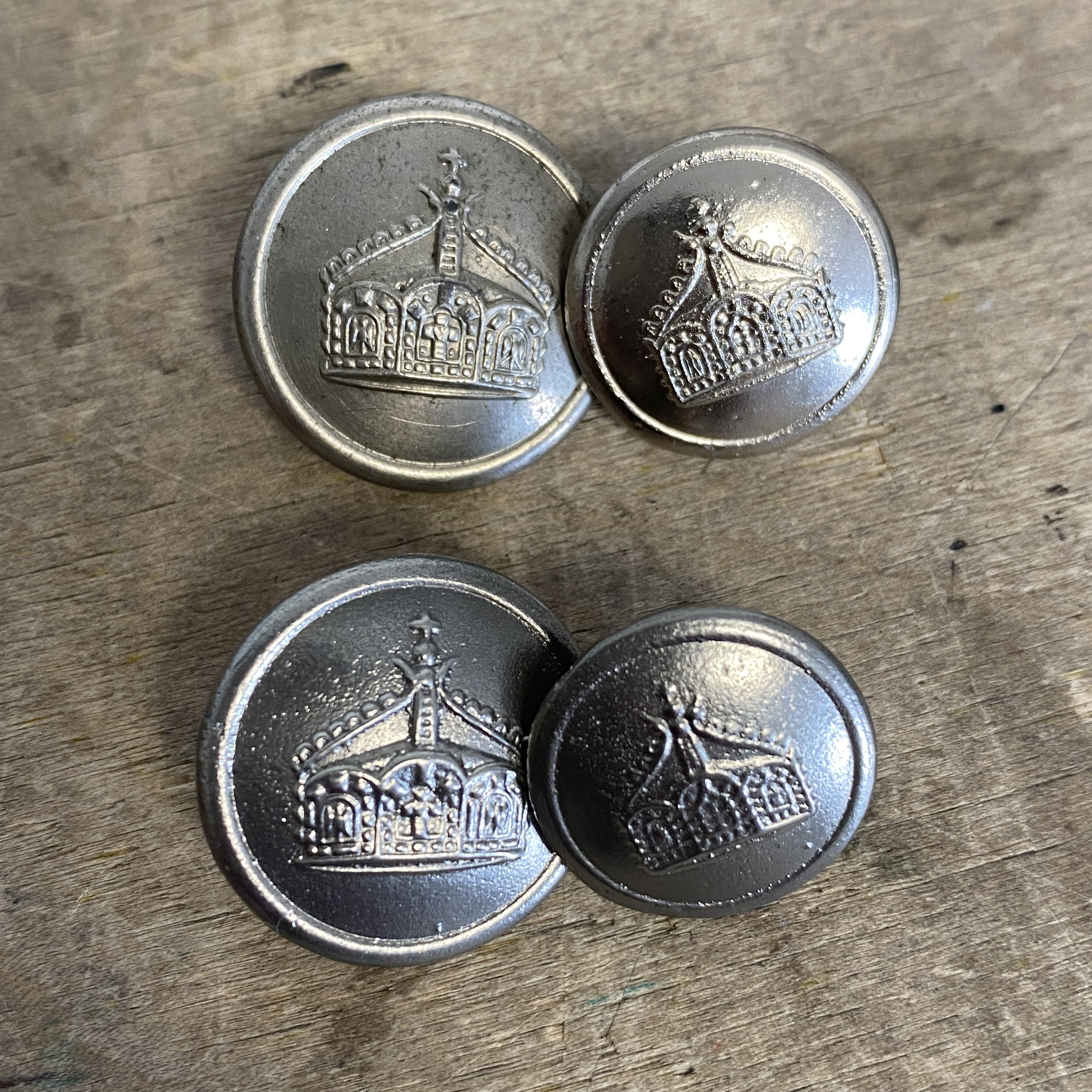
original buttons (above) and copies (below)
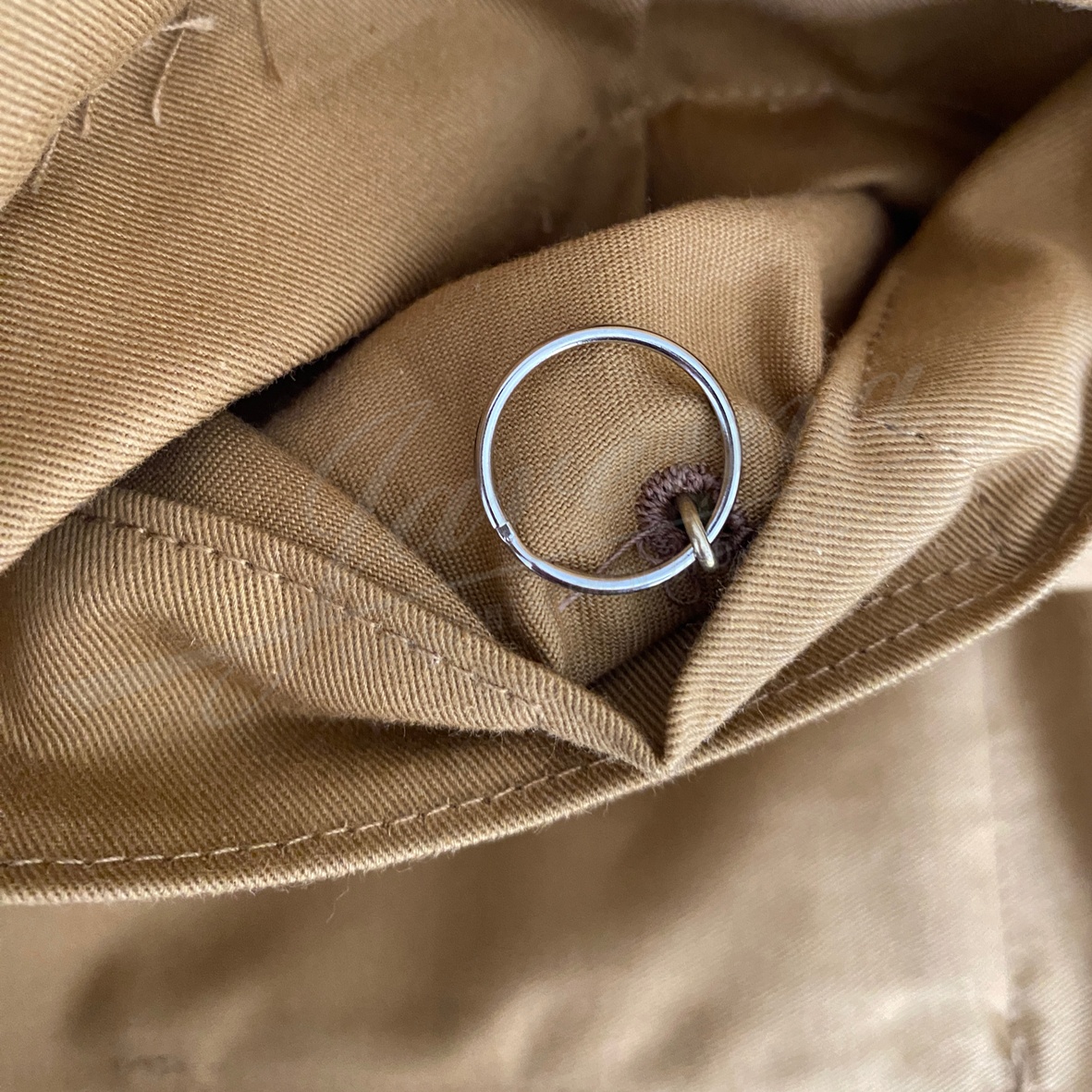
mounting of the button
The shoulder straps are made from cotton soutache with an internal cotton core. Each strap is entirely hand-sewn — never glued — following the construction of the original examples.
Just like the original Schutztruppe shoulder straps, they are also graded according to the size of the uniform. This means that the shoulder straps are not made in a single universal size: larger tunic sizes receive proportionally longer straps, preserving the correct proportions of the original garment.
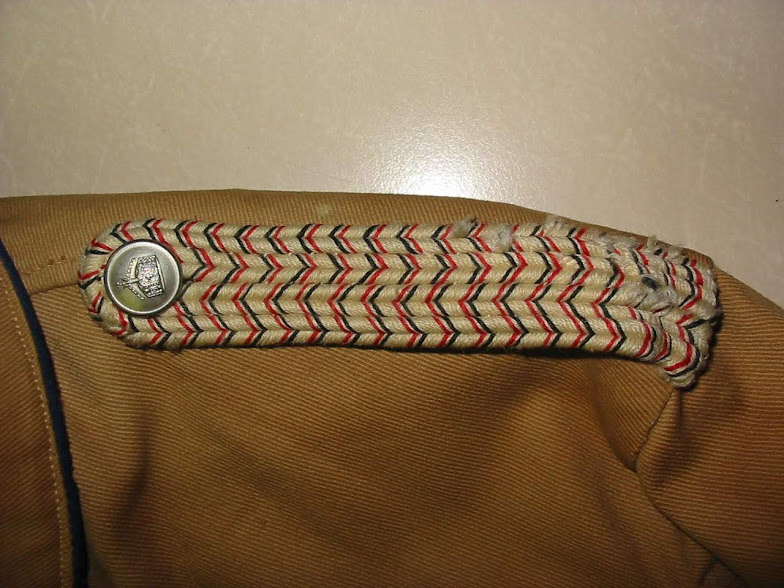
original piece of Schutztruppe shoulder strap
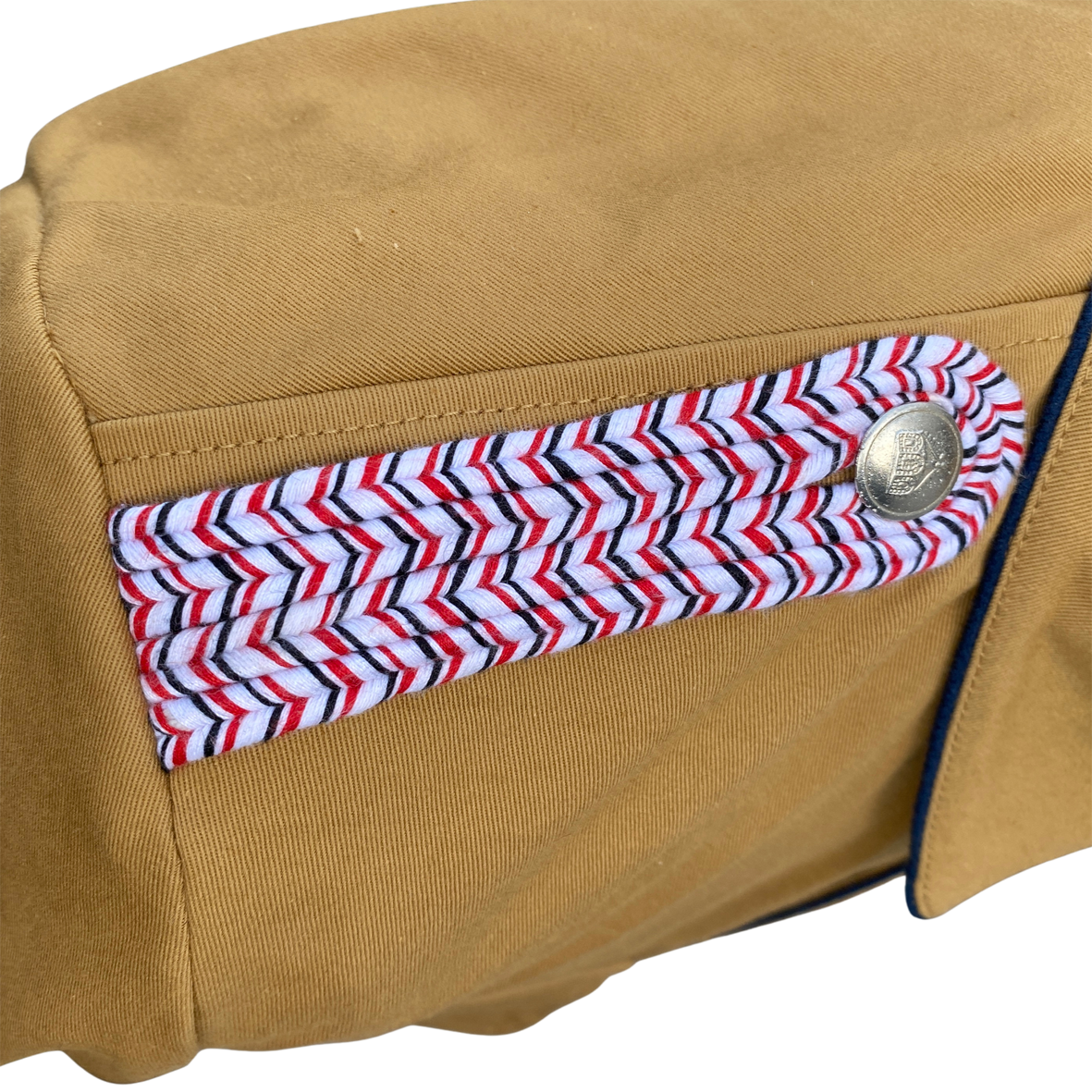
my copy
Developing the pattern
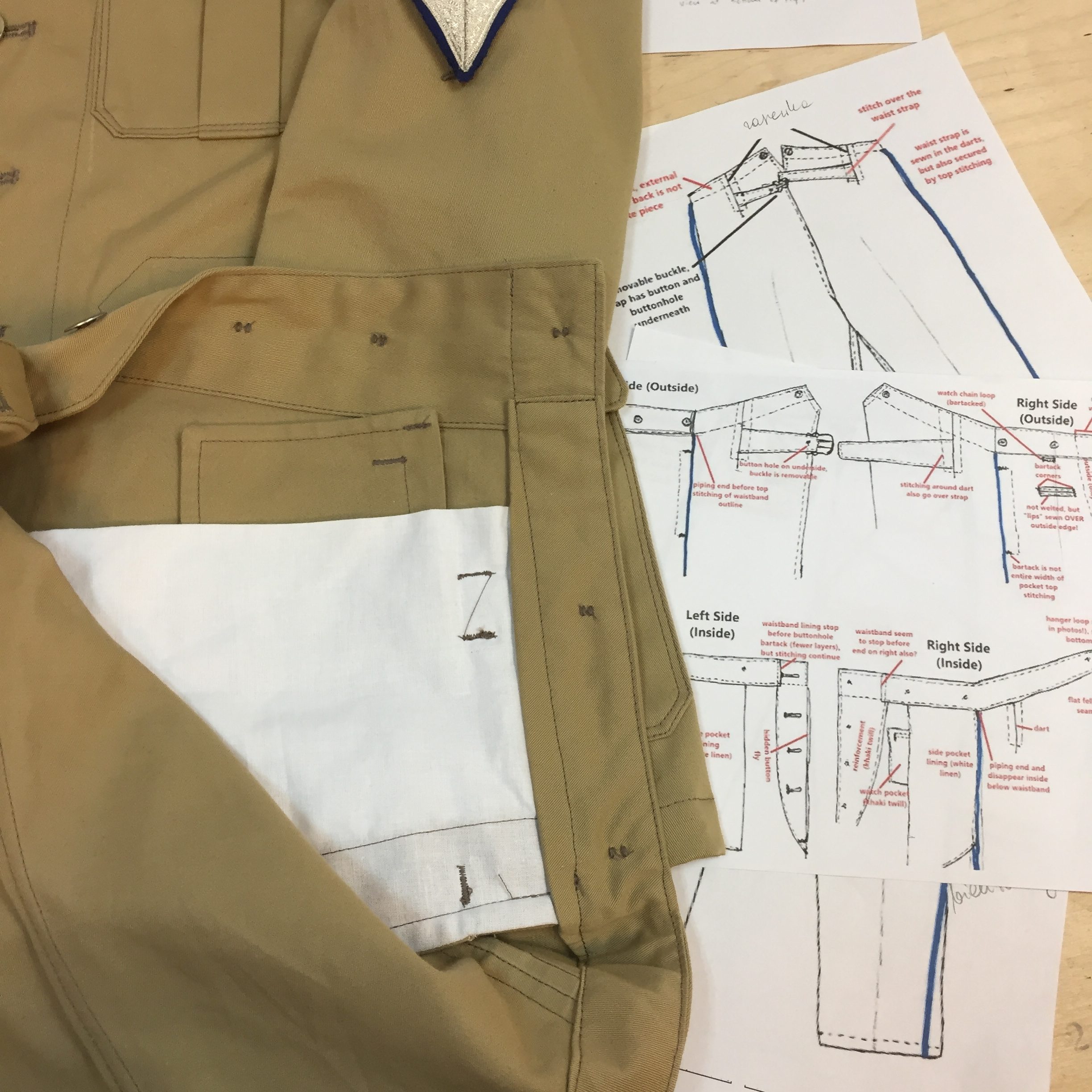
Klaus provided me with a great collection of reference material, including photographs of surviving original Schutztruppe pieces, with close-up views of important construction details. He also prepared a series of conceptual drawings illustrating various features and construction solutions found on the originals.
These materials provided an excellent visual reference, but they were not ready-made sewing patterns. The actual pattern development, dimensions and proportions had to be reconstructed from scratch.
I developed the pattern by carefully analysing the proportions visible in the surviving pieces and photographs, while also drawing on my experience with the construction and characteristic cutting methods of other Imperial German military uniforms of the period. Elements that could not be established directly from the available reference material therefore had to be interpreted through a combination of comparative analysis, period tailoring conventions and practical pattern-making experience.
This process resulted in a complete working pattern that could then be used to produce the first prototype and evaluate how the proportions and construction worked as an actual three-dimensional piece rather than simply on paper.
The tunic
Despite its seemingly simple appearance, the tunic proved to be quite a challenge to reproduce. The basic cut itself is relatively straightforward: a classic single-breasted tunic with a stand-and-fall collar. Its internal construction, however, is a perfect example of the German fondness for making seemingly simple things considerably more complicated than necessary.
The button attachment system alone determines the construction of several other elements. Instead of being sewn directly to the tunic, each button is passed through a small round hole in the fabric and secured from the inside with a metal retaining ring. As a result, the front facing consists of three separate layers: the main tunic fabric, an additional reinforcement behind the buttons, and an inner facing concealing the retaining rings.
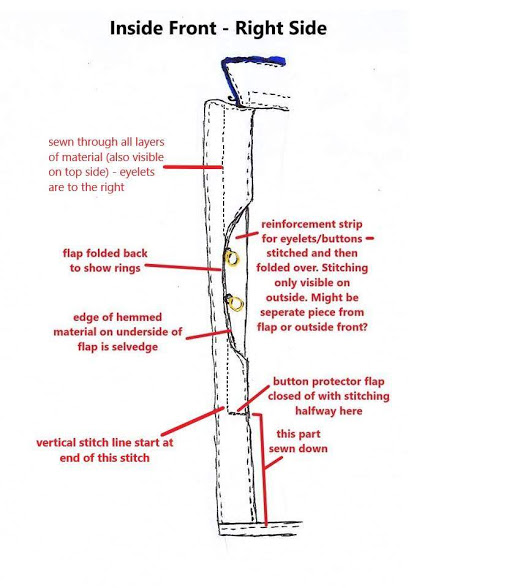
Klaus' drawings showing the construction of the front facing
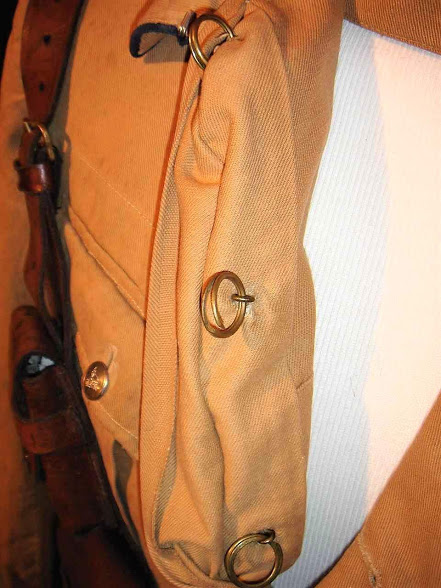
the element on an original M1896 tunic
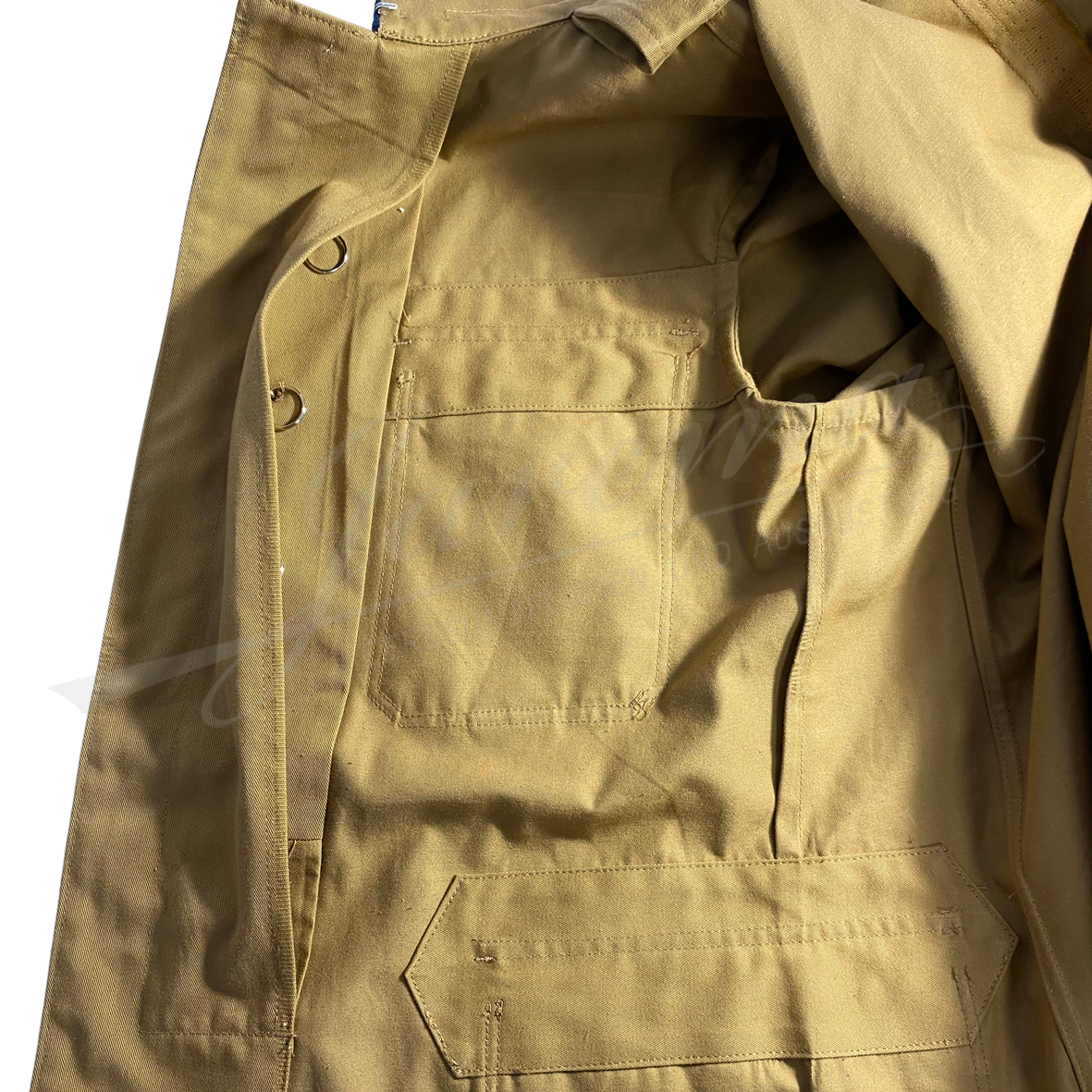
the same construction reproduced on our M1896 Schutztruppe tunic
The pockets are similarly elaborate, particularly the upper patch pockets with their central box pleats. The retaining rings of the pocket buttons are cleverly concealed within the construction of the pleat itself, with an additional strip of lining covering the attachment from the inside.
Each pocket is, of course, reinforced from the reverse of the tunic with an additional piece of fabric. The seams securing the pocket flaps are further strengthened with bar tacks at the stress points.
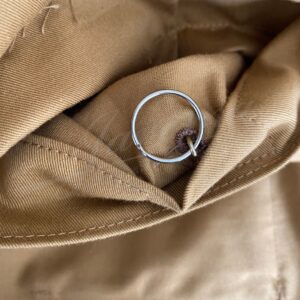
The sleeves present another example of period construction techniques that would normally be simplified in modern clothing production. The sleeve seams themselves are constructed as flat-felled seams, while the sleeves are attached to the body using concealed French seams. Today, these raw edges would most likely be finished quickly with an overlocker. The surviving original tunics, however, show a much more laborious construction, with the seams carefully folded and stitched twice to enclose the raw edges without the use of modern overlocking.
The only construction detail I was unable to reproduce exactly as found on the original examples is the centre-back seam. Although I recreated the seam itself using the same technique, modern fabric selvedges differ considerably from those found on historical textiles. This remains the most noticeable constructional difference between our reproduction and the surviving originals.
The trousers
The trousers follow a cut similar to that of other Imperial German military trousers and are perhaps closest in construction to the Drillichhose, made from cotton HBT. They share several characteristic features, including pockets set into the side seams and trouser legs constructed with flat-felled seams.
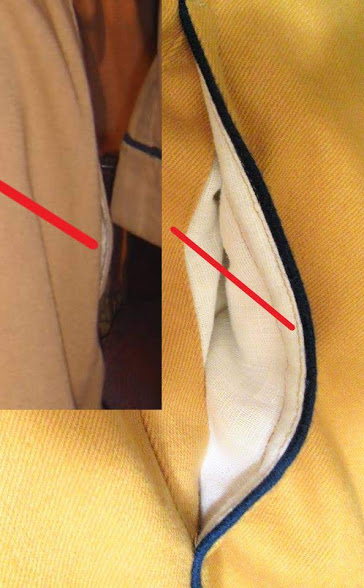
a detail of pocket on original Schutztruppe M1896 trousers
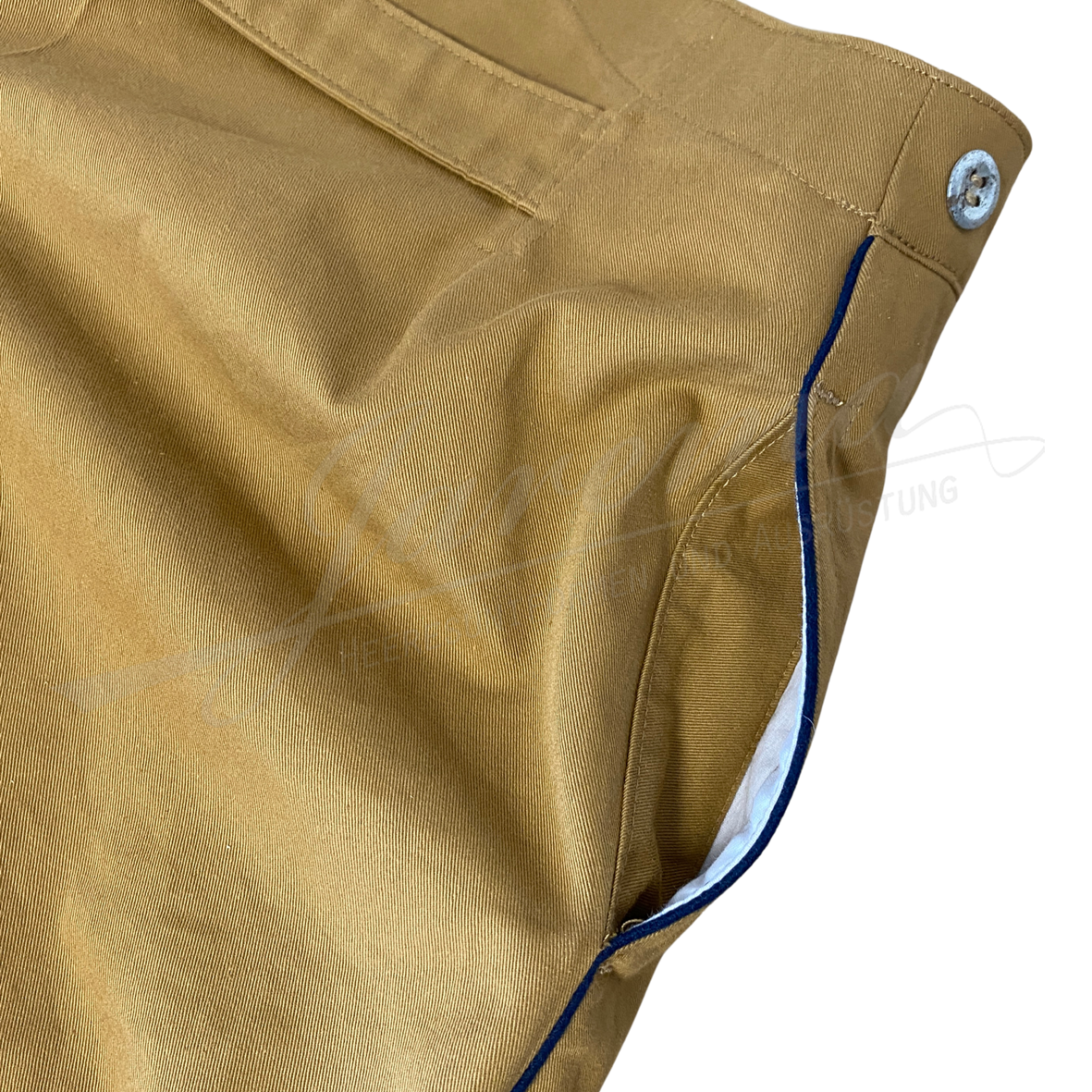
my copy
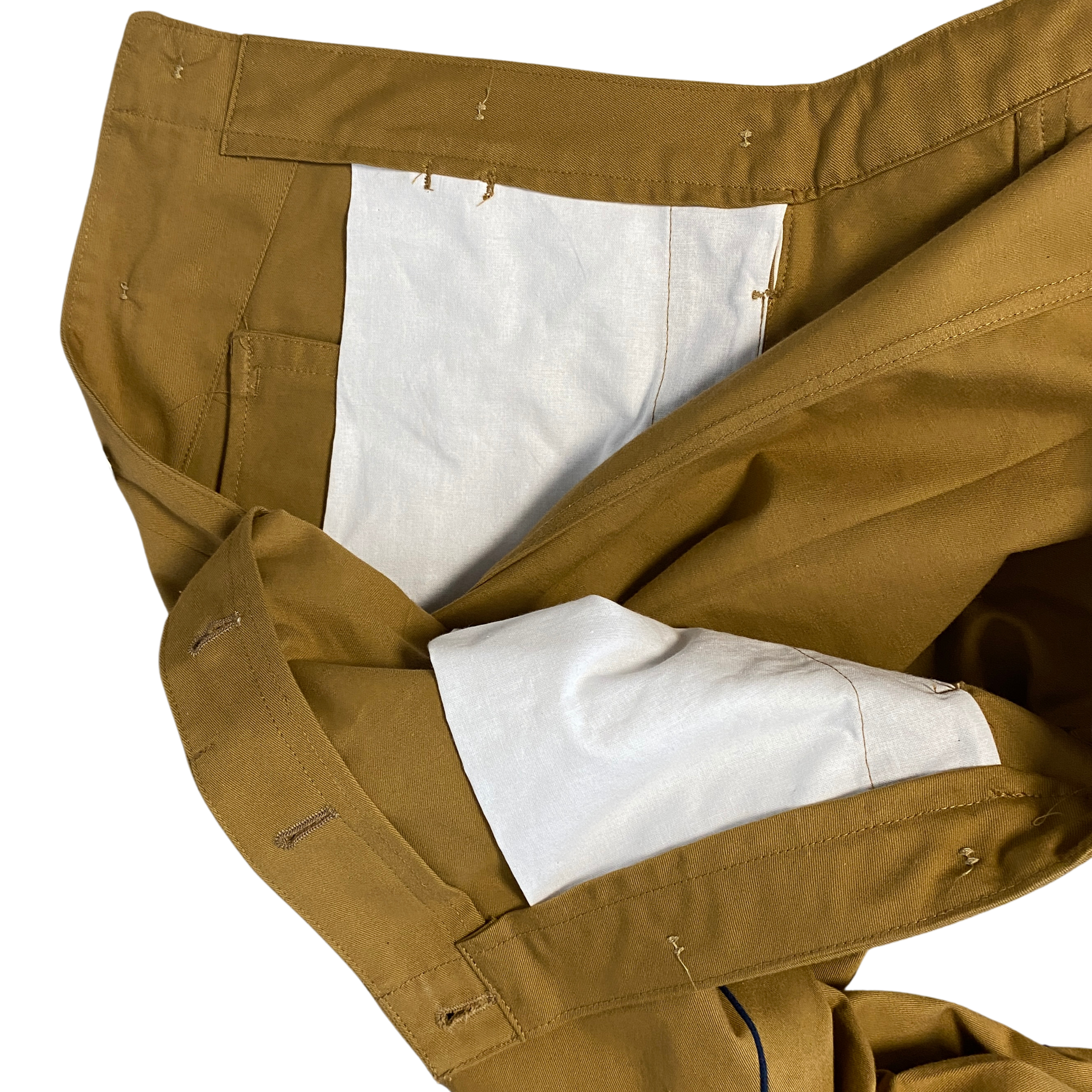
The most complex part of the trousers is the waistband. Rather than being cut as a single piece, it is assembled from several separate sections and lined on the inside with the same fabric as the trousers.
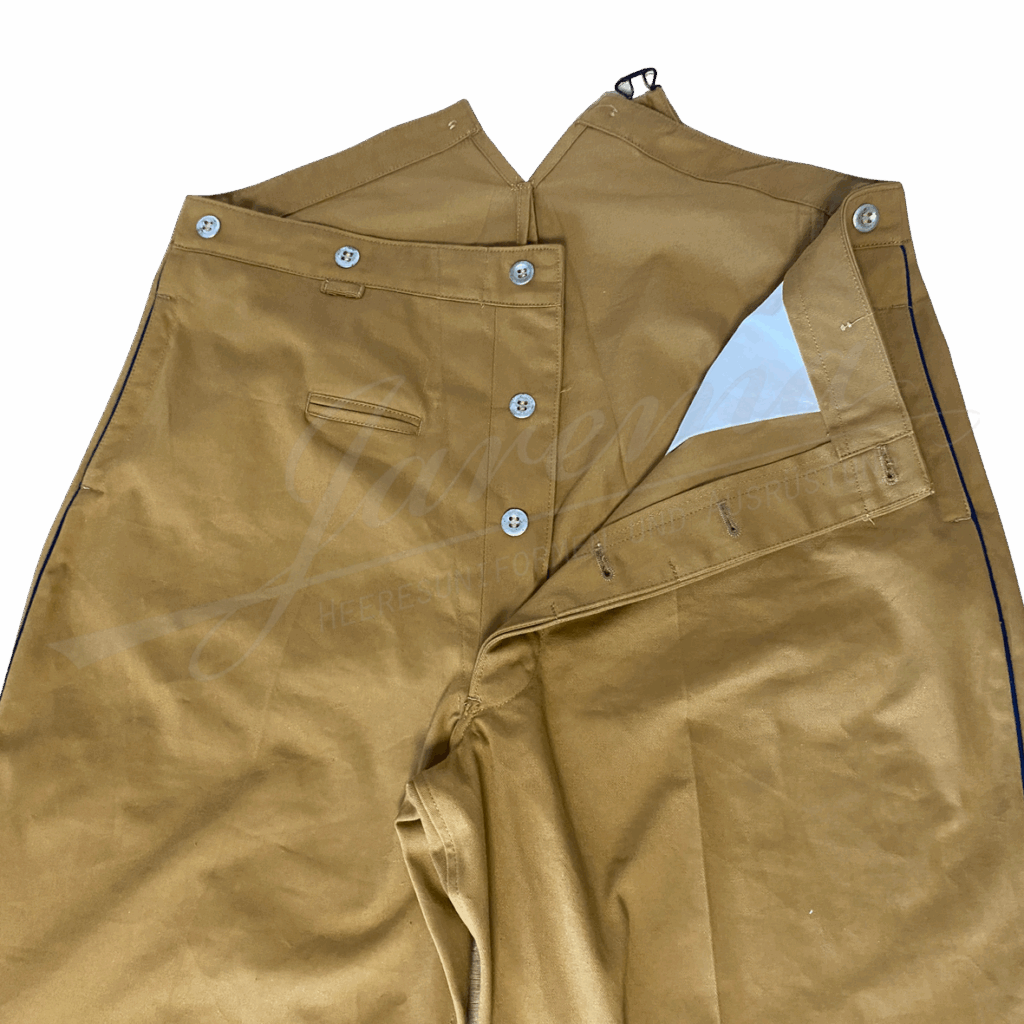
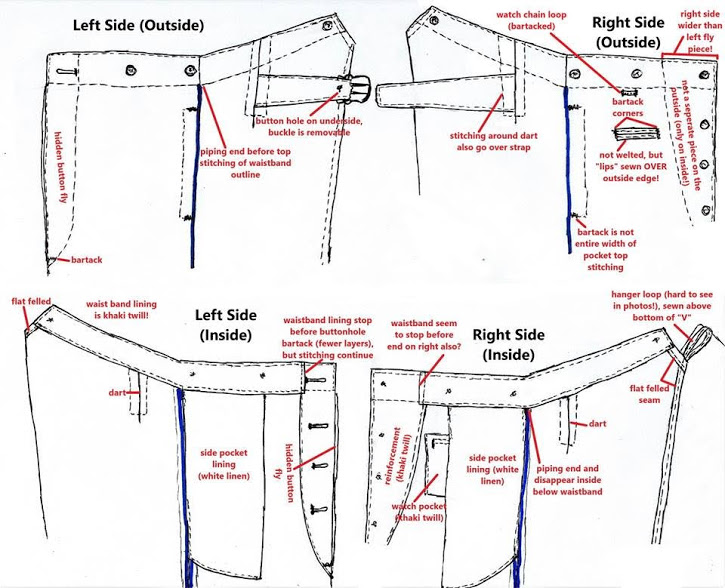
Klaus' reconstruction drawings showing the original waistband construction
The construction of the fly is also unusual compared with other German military trousers. The button facing has a distinctive triangular shape, while the trousers lack the reinforcement piece normally found at the crotch seam junction, where the inside leg seams meet the centre front and centre back seams. This makes finishing the fly considerably more complicated. On wool German military trousers, the seam allowances around this junction are simply concealed beneath the reinforcement piece. On the Schutztruppe trousers, however, the seam allowances have to be carefully turned under and finished individually before stitching.
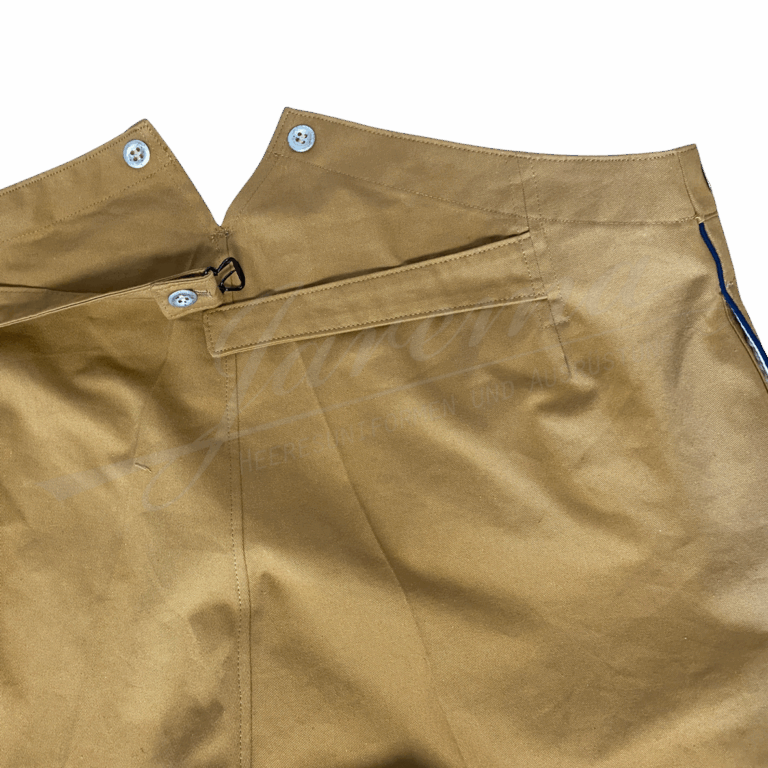
The final characteristic detail is the waist adjustment strap, fitted with a removable metal adjuster. As accurate reproductions of these fittings are currently unavailable, I decided to use original period adjusters on our reproduction trousers — at least for as long as my supply of originals lasts.
The Finished Uniform
The finished M1896 Schutztruppe uniform is the result of considerably more work than its relatively simple appearance might suggest. From selecting the correct fabrics and reproducing otherwise unavailable buttons, to reconstructing the pattern and recreating the unusual internal construction of the tunic and trousers, virtually every element required some degree of research, interpretation or experimentation.
The first completed uniform also became an important part of the research process itself. Comparing the finished piece with surviving originals and discussing it with Klaus allowed me to identify details that could still be improved — most notably the colour of the main fabric. The version we produce today is therefore not simply the result of studying historical sources, but of turning that research into a physical prototype, evaluating it and refining it further.
There will always be limitations when reproducing a piece manufactured more than a century ago with materials available today. Wherever possible, however, I have tried to reproduce not only the outward appearance of the M1896 uniform, but also the construction methods and small technical details hidden inside it.
And while researching this uniform, I came across a particularly interesting connection between the Schutztruppe and a German regiment much closer to home — Infanterie-Regiment Nr. 46
From Posen to Africa
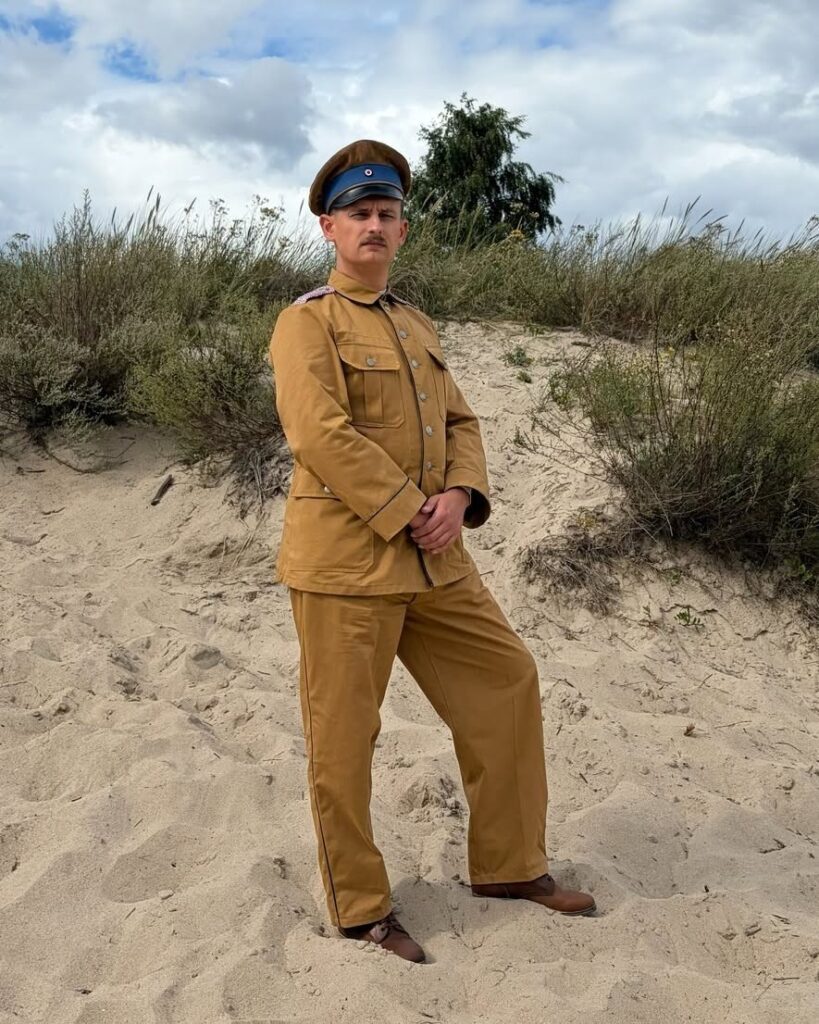

M1896 Schutztruppe Uniform Reproductions
The research and reconstruction process described above forms the basis of the M1896 Schutztruppe uniform reproductions currently made in our workshop.
If you are interested in completing a Schutztruppe impression, the individual pieces are available here:
→M1896 Schutztruppe Tunic
→M1896 Schutztruppe Trousers
→Schutztruppe Corduroy Cap
→Schutztruppe Woolen Cap
Each piece is made to order using the patterns, materials and construction methods developed through the research described in this article.
